
Pet urine on carpet: why the smell comes back
You cleaned it up straight away. You used the enzyme spray, let it dry, maybe sprinkled baking soda over the top. For a day or two, nothing. Then the next rainy afternoon hit, the air in the flat turned heavy, and the smell was back, stronger than before.
This is not a coincidence. It is chemistry, and Singapore's humidity makes it worse than almost anywhere else. Understanding why the odour returns is the first step to actually stopping it.
Why this matters: Pet urine that is not fully extracted from the carpet backing and underlay will keep releasing odour every time humidity rises, and in Singapore, that is most of the year.
Highlights
- Pet urine soaks through the carpet pile into the backing and underlay, where surface treatments cannot reach
- Uric acid crystals are the source of the persistent smell; they reactivate whenever moisture levels rise
- Singapore's tropical humidity means the problem resurfaces far more often than in drier climates
- Hot-water extraction reaches the backing layer, flushing out the crystals that surface sprays leave behind
- Eco-friendly, safe solutions, no harsh chemical residue for pets or children crawling on the carpet
Why the smell keeps coming back
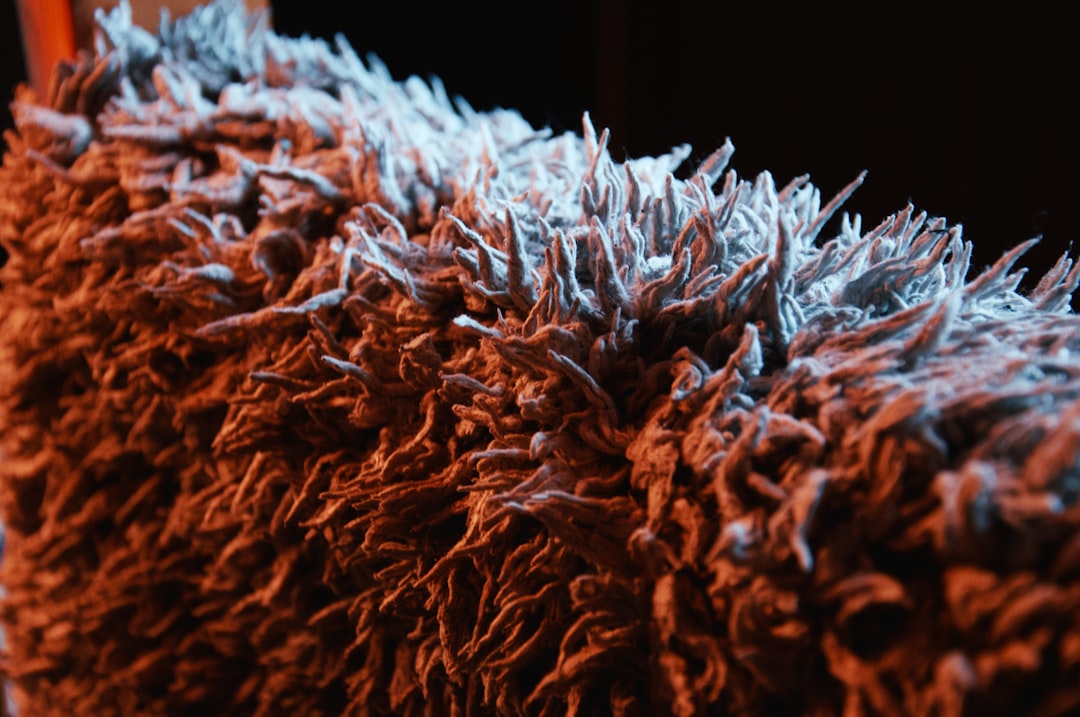
Most DIY treatments work on the surface. A pet urine spray, an enzyme cleaner, even a home carpet shampooer, these tackle the visible stain and the odour on the pile, the fibres you can see and touch. What they cannot do is reach the carpet backing or the underlay beneath it.
When a pet urinates on carpet, the liquid does not stay in the pile. It wicks downward through gravity, spreading as it goes, until it saturates the latex or woven backing and soaks into the underlay below. The stain you see on the surface may be the size of a dinner plate; the contaminated area underneath can be two or three times larger.
The role of uric acid crystals
Urine contains urea, urochrome and uric acid. The first two break down and disperse relatively easily. Uric acid does not. It forms crystals as it dries, and those crystals bind tightly to carpet fibre, backing material and underlay foam. They are largely insoluble in water, which is why a damp cloth or a spray-and-blot approach has little effect on them.
The crystals themselves are odourless when completely dry. The smell returns when they absorb moisture and reactivate the bacteria that feed on them, releasing the ammonia and mercaptan compounds that make pet urine smell so sharp. In a dry climate, this might happen occasionally. In Singapore, where relative humidity sits above 80% for much of the year, it happens constantly.
What actually removes pet urine odour from carpet
The only way to permanently remove pet stain odour from carpet is to remove the uric acid crystals from the backing layer, not just treat the surface above them. That requires a method that reaches the full depth of the contamination.
Hot-water extraction versus surface treatments
Hot-water extraction, sometimes called steam cleaning, injects hot water and cleaning solution under pressure into the carpet pile, then immediately extracts it along with whatever it has loosened. Done properly, the extraction wand reaches through the pile and into the backing, physically flushing out uric acid residue, bacteria and the dissolved solids that surface methods leave behind.
A comparison of common approaches:
|
Method |
Reaches the backing |
Removes uric acid crystals |
Effective long-term |
|---|---|---|---|
|
Blotting and enzyme spray |
No |
Partially, at surface only |
Rarely |
|
DIY carpet shampooer |
Sometimes |
No |
Rarely |
|
Baking soda and vinegar |
No |
No |
No |
|
Hot-water extraction (professional) |
Yes |
Yes, with correct pre-treatment |
Usually |
The Carpet and Rug Institute advises removing both the stain and the odour so the spot does not become a scent marker for future accidents, which is exactly the problem when treatment stops at the surface and the crystals remain.
Pre-treatment matters
For pet urine specifically, hot-water extraction works best when it is preceded by a targeted pre-treatment that breaks down uric acid before the extraction pass. A professional technician will identify the affected area, sometimes with a UV light, which shows urine contamination the eye cannot see, apply the appropriate treatment, allow dwell time, then extract. Without that pre-treatment step, even a good extraction pass may not fully dissolve the crystals.
This is where the scale of the contamination in the backing matters. If urine has been deposited in the same area multiple times, or if it has been there for months, the backing and underlay may have absorbed far more than a single event suggests. In those cases, a professional assessment will tell you honestly whether the underlay needs replacing, because no amount of cleaning will fully resolve an underlay that is heavily saturated.
When DIY is reasonable and when it is not
For a single, fresh accident on a synthetic carpet, prompt action does help. Blot (never rub) as much liquid as possible immediately, working from the outside of the stain inward. Apply an enzyme-based cleaner and allow proper dwell time. This limits how much urine penetrates to the backing and buys time.
But there are situations where DIY is unlikely to be enough:
- The odour has returned after previous treatment
- The accident happened on a wool, silk or natural-fibre rug (these are sensitive to moisture and many chemical treatments)
- There are multiple contaminated spots from repeated accidents
- The carpet has been down a long time and the smell has been building
- You have tried two or more treatments and the smell keeps coming back with the humidity
In these cases, a professional clean using hot-water extraction with specialist pre-treatment is the realistic path to removing the odour rather than masking it. You can read more about the difference between what a professional extraction service achieves and what a rental machine can manage in our article on what carpet cleaning specialists do that a DIY machine rental cannot.
For homes with recurring pet accidents, our professional carpet cleaning service includes a pre-inspection to identify all affected areas before the clean begins.
If you also have a fabric sofa or armchair that a pet uses regularly, the same principle applies: odour builds up in the upholstery batting and frame fabric, not just on the seat surface. Our upholstery and sofa cleaning service uses the same extraction approach on soft furnishings.
For a broader look at how often these kinds of deep cleans make sense in a Singapore home, the article on how often to deep clean carpets and upholstery in Singapore covers the practical scheduling question in full.
Frequently asked questions
Why does the pet urine smell come back after I've already cleaned the carpet?
The odour source is uric acid crystals lodged in the carpet backing and underlay, not on the surface. Surface treatments leave these crystals behind. When humidity rises, which happens often in Singapore, moisture reactivates the crystals and the smell returns. Removing it for good requires extraction that reaches the backing layer, not just the pile above it.
Can baking soda or vinegar permanently remove pet urine odour from carpet?
They can reduce the smell temporarily by neutralising some of the surface compounds. Neither dissolves uric acid crystals in the backing, so the relief is short-lived, particularly in a humid climate. They are reasonable first-aid measures for a very fresh accident, but not a permanent solution for odour that has already set into the carpet.
Will the smell come back after a professional clean?
If the clean includes proper pre-treatment and full extraction through the pile and backing, the uric acid crystals are removed rather than masked. In most cases the odour does not return. The exception is when the underlay is heavily saturated from repeated accidents: in that situation the underlay may need replacing, and a professional assessment will tell you whether that is the case before you commit to a clean.
Is hot-water extraction safe for all carpet types with pet stains?
For most synthetic carpets, nylon, polypropylene, polyester, hot-water extraction is the right approach. Wool, silk and other natural fibres need more care: the water temperature, the solution pH and the dwell time all need to be matched to the fibre. A professional technician will assess the carpet before choosing the method, which is why the same technique that works well on a synthetic bedroom carpet is not automatically applied to a Persian or Oriental rug.
How soon after an accident should I call a professional?
The sooner the better, fresh urine has not yet fully crystallised, so extraction is more effective and less dwell time is needed. That said, a professional clean can still make a significant difference on older stains, though results depend on how long the contamination has been there and how deeply it has penetrated the backing and underlay. If you have already tried home treatment and the smell keeps returning, that is a clear sign the crystals are in the backing and need professional attention.
Ready to remove the odour for good? Contact iCleanCarpet for a free quote. Call us on 6241 9443 or email info@icleancarpet.sg and our team will assess the affected area and recommend the right treatment.